Can you drink the water in the Lake District?
The filter everyone tells you to buy removes the thing Lakeland water mostly hasn’t got — and removes none of the thing it has below the old mines. So the useful answer isn’t a filter. It’s a map.
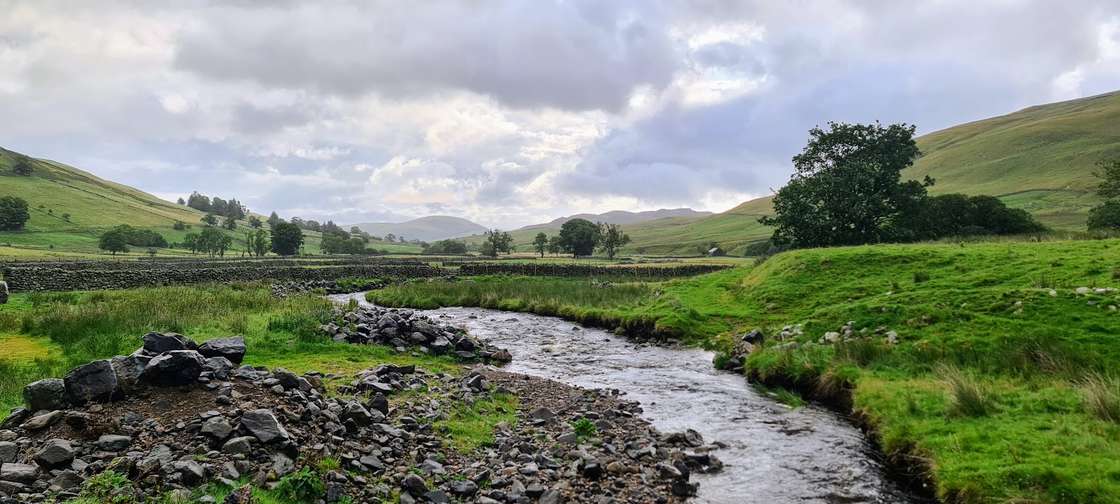
high on the fell, from a fast-flowing beck, as far from grazing and habitation as you can manage, the water is usually fine — but the Lakes are grazed almost to the tops, so the official advice to treat it or carry your own is sound, and we’d follow it. And there is one specific exception that no filter and no amount of boiling will fix, and it is worth knowing exactly where it is. This is that map.
1. Three facts that collide
the Lakes are full of abandoned metal mines, and their adits still run. Abandoned metal mines pollute around 1,500 km of England’s rivers and are a leading source of the lead, cadmium and zinc in them (the Environment Agency’s abandoned-metal-mines baseline (opens in new tab); Water and Abandoned Metal Mines programme (opens in new tab)).
the becks below them carry dissolved lead, cadmium, zinc and copper — not silt you can see, but metal in solution. The Environment Agency samples these becks and classifies the water bodies as failing because of “pollution from abandoned mines” (EA Catchment Data Explorer, Glenridding Beck (opens in new tab)).
a hollow-fibre backpacking filter — the Sawyer, the LifeStraw, the whole squeeze category — removes bacteria and protozoa and, as a matter of physics, cannot remove dissolved metals at all. So the standard advice (“buy a good filter”) solves the problem these becks mostly don’t have and does nothing about the one they do.
Put those together and the useful thing to hand a walker is not a product recommendation. It is a list of which becks, and why.
2. The map: which becks, and why
We took the Environment Agency’s own metal measurements and joined them to the walking routes we publish — every sampling point within about 250 metres of a route line. Below are the becks that a walking route actually crosses which run below a documented abandoned metal mine. Each mine link is the Environment Agency’s own record, not our guess.
| Beck | Where you cross it | What it carries (dissolved) | Safe to drink? |
|---|---|---|---|
| Gategill Beck | Blencathra | lead up to about 203 µg/L (limit 10); cadmium up to about 18.5 µg/L (limit 3) | Do not drink |
| Yewthwaite Gill | the Newlands round (Ard Crags) | lead up to about 81 µg/L (limit 10) | Do not drink |
| Glenridding Beck & Swart Beck | Helvellyn | lead up to about 43.5 µg/L (limit 10) | Do not drink |
| Newlands Beck | Dale Head (Newlands) | lead about 8 µg/L (limit 10) — below the drinking limits | Polluted, but under the drinking limit |
| Coledale Beck | Grisedale Pike | zinc about 196.5 µg/L (no drinking guideline) — below the drinking limits | Polluted, but under the drinking limit |
| Church Beck & Levers Water | the Old Man of Coniston | copper about 18 µg/L (limit 2000); zinc about 17.4 µg/L (no drinking guideline) — below the drinking limits | Polluted, but under the drinking limit |
Most other becks we could check ran far below the drinking guideline for these metals. The list above is where the mine metals concentrate — a specific map, not a general alarm about Lakeland water. One caveat on it: Newlands Beck’s lead sits just under the limit rather than comfortably below, so treat that one or carry your own too.
Now notice what actually decides the verdict. Force Crag pours zinc into Coledale Beck, and Coniston’s coppermines put copper and zinc into Church Beck — both genuinely bad for the river. But zinc has no health-based drinking guideline at all (it is a taste problem), and copper’s is so high that even a coppermine beck stays far under it. So the size of the metal number tells you almost nothing about whether the water is safe to drink. The proof is Gategill Beck: it carries the highest metal load in this whole dataset — thousands of micrograms of zinc a litre, far more than Coledale — and it is also the most dangerous beck here to drink. But it is dangerous for its lead and cadmium, not its zinc; Coledale, with a fraction of the zinc, is safe. The number that frightens you is the wrong number to read. It is the quiet lead and cadmium on Blencathra, Helvellyn and in Newlands that decide it.
3. Why the gear can’t help (below a mine)
This is the part worth understanding rather than memorising, because it decides what is and isn’t worth carrying.
| Method | Removes | Does NOT remove |
|---|---|---|
| Squeeze / hollow-fibre filter Sawyer, LifeStraw, Katadyn BeFree, Platypus | Bacteria, protozoa (incl. Cryptosporidium) | Dissolved metals, chemicals, viruses. Destroyed by freezing. |
| Chemical (chlorine dioxide) Aquamira, Katadyn Micropur | Bacteria, viruses; crypto only with a long (~4 h) wait | Metals, chemicals. Silt slows it. |
| Press purifier + carbon Grayl GeoPress | Bacteria, protozoa, viruses; some metals at low levels | High lead, mercury, cyanotoxins — Grayl say so themselves. |
| Boiling — | All pathogens | Metals — and it slightly concentrates them. |
| Reverse osmosis / nanofiltration Home / expedition units | Dissolved metals, most everything | Not a thing you carry up a fell. |
A squeeze filter works by physically blocking anything bigger than about a tenth of a micron — plenty to stop bacteria and protozoa, useless against a dissolved metal ion thousands of times smaller. Sawyer put it plainly: the filter “does not remove chemicals and heavy metals, and neither will other manufacturers’ filters” (Sawyer filtration FAQ (opens in new tab)). Boiling is worse than useless here: metals don’t evaporate, so boiling off water leaves the same metal in less of it — the CDC states plainly that boiling does not reduce lead (US CDC (opens in new tab)). And the one mainstream walker’s product with a real metals claim, the carbon-based Grayl GeoPress, tells you itself that its cartridge is “not designed to protect against… very high lead levels” or industrial contamination (Grayl technical specs (opens in new tab)). Removing dissolved metals needs reverse osmosis or nanofiltration — not something you carry up a fell. Below these becks, the honest gear advice is: carry your own water.
4. The risk that is real: sheep, and algae
None of this means most Lakeland water is dangerous — it means the danger isn’t the one the gear is sold for. The real pathogen risk on a grazed hillside is Cryptosporidium, a faecal organism from livestock, and the Lakes are grazed almost to the tops. We won’t give you a number for how many walkers it makes ill, because nobody counts it — but the mechanism is real, and crypto is stubborn: it shrugs off chlorine, so purifying tablets need a long contact time against it. Chlorine dioxide needs up to about four hours, not the fifteen minutes that handles ordinary bugs (Murphy et al., Environmental Science & Technology, 2014 (opens in new tab)). A filter fine enough for protozoa does catch it; boiling kills it outright. (More on this in our summer-on-the-fells guide (opens in new tab).)
Blue-green algae is the other one, and it matters for tarns — still water on a warm day, exactly where a hot walker is tempted. No filter and no purifier removes its toxins. We don’t hard-code which waters are affected because it changes week to week; check the live map instead (UKCEH Bloomin’ Algae (opens in new tab)).
5. What the official advice says — and doesn’t
Here is the quiet gap this piece exists to fill. The official guidance is written for the bug risk and is silent on the metal one. Mountaineering Scotland’s water guidance covers Giardia, E. coli, Leptospirosis, blue-green algae — and doesn’t mention mining or metals at all (Mountaineering Scotland (opens in new tab)). The Lake District National Park’s own walking-safety advice is a blanket line: “it’s advisable to avoid drinking from natural water sources” (Lake District National Park Authority (opens in new tab)) — sensible, but it doesn’t say which becks, or why, or that below the old mines it is a different kind of problem entirely. None of them is wrong. They are answering the pathogen question. Nobody is drawing the map.
6. What to actually do
The mine-beck warnings above appear on the relevant fell pages too — see Blencathra, Helvellyn and the others. The underlying data is a downloadable CSV, © Environment Agency under the Open Government Licence.
Frequently asked questions
Can you drink water from becks and streams in the Lake District?
Usually, from a fast-flowing beck high on the fell and well away from livestock, the risk is low — but the official advice is to treat it or carry your own, and there is one specific exception that no filter fixes. Below a handful of abandoned metal mines — on Blencathra, Helvellyn, the Newlands fells, Coniston and Coledale — the becks carry dissolved metals, and on Blencathra, Helvellyn and in Newlands the lead runs several times the level that is safe to drink. See the map above for which becks. Everywhere else we checked, the water was clean on those metals.
Source: Environment Agency Water Quality Archive (opens in new tab)
Does a water filter remove lead and heavy metals?
No. A squeeze or hollow-fibre filter — a LifeStraw, Sawyer, Katadyn BeFree and the whole popular category — removes bacteria and protozoa by physically blocking anything bigger than about a tenth of a micron. Dissolved metal ions are far smaller and pass straight through. Sawyer say so themselves: the filter “does not remove chemicals and heavy metals, and neither will other manufacturers' filters.” Removing dissolved metals needs reverse osmosis, nanofiltration or the right adsorbent — not a backpacking filter.
Does boiling water remove lead or other metals?
No — and it can make it slightly worse. Metals do not evaporate at boiling point, so when some of the water turns to steam you are left with the same amount of metal in less water: a higher concentration, not a lower one. Boiling is excellent for killing bugs; it does nothing for dissolved metals. The US CDC states plainly that boiling does not reduce lead.
Isn't Cryptosporidium the real risk from beck water?
It is the pathogen most worth respecting here, because the Lakes are grazed and Cryptosporidium is a livestock-faecal organism — sheep are above almost every beck. But nobody counts how many walkers get ill from Lakeland beck water, so we won't invent a number. Two practical points: crypto is notably chlorine-resistant, so purifying tablets need a long contact time against it — chlorine dioxide needs up to about four hours, not the fifteen minutes that handles most bugs; and a filter fine enough to block protozoa does catch crypto. Boiling kills it outright.
Source: Environmental Science & Technology (Murphy 2014) (opens in new tab) · Summer on the fells (opens in new tab)
What about the zinc — isn't that the scary number at Force Crag?
Force Crag discharges a lot of zinc, and Coledale Beck below it carries far more zinc than clean water would. But zinc is the metal that is least likely to hurt a person: the World Health Organization has no health-based drinking guideline for zinc at all — it is a taste problem, not a health one. So the size of a zinc figure tells you nothing about the drinking risk: Coledale’s zinc is high and the water is safe to drink; Gategill Beck on Blencathra carries far more zinc still, and it is the most dangerous of the lot — but for its lead and cadmium, not its zinc. That is why this piece talks about lead and cadmium, and never quotes a ‘times the safe limit’ figure for zinc.
Source: WHO Guidelines for Drinking-water Quality (opens in new tab)
Read next
Sources
- Environment Agency — Water Quality Archive (sampling points and metal observations, Open Government Licence v3.0) (opens in new tab)
- Environment Agency — Catchment Data Explorer — Glenridding Beck water body GB102076070740 (reason for not achieving good: pollution from abandoned mines) (opens in new tab)
- Environment Agency / Defra — Abandoned metal mines in England — baseline (around 1,500 km of rivers polluted by lead, cadmium, zinc and other metals) (opens in new tab)
- Environment Agency / Defra — Derwent North West management catchment — abandoned metal mines baseline (names Coledale Beck, Yewthwaite Gill and Newlands Beck) (opens in new tab)
- Environment Agency / Defra — Kent and Leven management catchment — abandoned metal mines baseline (names Coniston Copper Mines, Red Dell Beck, Levers Water, Church Beck) (opens in new tab)
- Mining Remediation Authority / EA / Defra — Water and Abandoned Metal Mines (WAMM) programme (opens in new tab)
- World Health Organization — Guidelines for Drinking-water Quality (lead 10 µg/L provisional; cadmium 3 µg/L; copper 2000 µg/L; no health-based guideline for zinc) (opens in new tab)
- US Centers for Disease Control and Prevention — Lead in drinking water — boiling does not reduce lead (opens in new tab)
- Sawyer — Filtration FAQ — hollow-fibre filters do not remove chemicals or heavy metals; replace if frozen (opens in new tab)
- Grayl — GeoPress technical specifications — not designed for very high lead, mercury, industrial contamination or cyanotoxins (opens in new tab)
- Environmental Science & Technology (Murphy et al., 2014) — Efficacy of chlorine dioxide tablets on inactivation of Cryptosporidium oocysts (opens in new tab)
- Mountaineering Scotland — Drinking water guidance (pathogens; no mention of metals) (opens in new tab)
- Lake District National Park Authority — Walking safety tips (“avoid drinking from natural water sources”) (opens in new tab)
- UK Centre for Ecology & Hydrology — Bloomin' Algae — live blue-green algae reports (opens in new tab)
- hikes.guide — Summer on the fells (Cryptosporidium and blue-green algae, graded) (opens in new tab)