Lake District first aid: a field guide to fell-walking safety
On the fells, you are the first responder. Help can be an hour or two away — and what you do in that window is a holding action that keeps someone alive and stable until Mountain Rescue arrives.
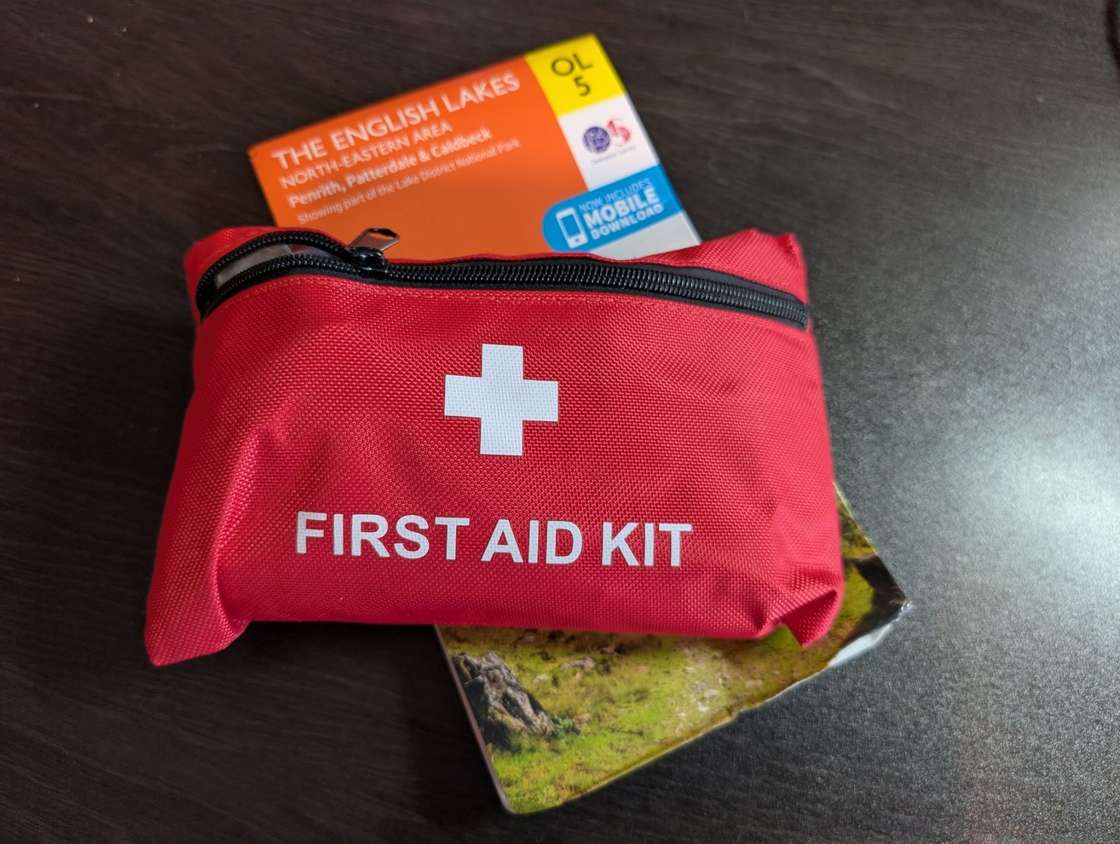
Read this first
This guide is general information from a fell-walker, not medical advice and not a substitute for hands-on first-aid training. In an emergency dial 999 (ask for Police, then Mountain Rescue). If in doubt, call for help. The clinical guidance here is drawn from UK authorities — the Resuscitation Council UK (opens in new tab), St John Ambulance (opens in new tab), the British Red Cross (opens in new tab) and the NHS (opens in new tab) — but guidance changes; always check the current source.
This guide is the companion to our Lake District navigation guide. Where that one answers how do I find my way, this one answers what do I do when something goes wrong. It pulls together the fundamentals — the kit, the basics, the decisions — from named authoritative sources, alongside what I've learned as a fell-walker who carries a kit and has had to think hard about actually using it.
I want to be straight with you up front: I'm a hillwalker, not a medic. I haven't dressed this up with dramatic rescue stories I didn't live. What I can give you is an honest, Lake-District-specific guide built on the official guidance and years on these fells — the most genuinely useful first-aid primer for the Lakes I can write, and a strong nudge to go and get properly trained.
The most formal first-aid training I hold is the FA's Introduction to First Aid in Football — the course youth-football coaches take, which I did for the under-14s side I coach. It covers the basics well — CPR, the recovery position, dealing with knocks and breaks — but it's a grassroots sports course, not mountain first aid, and the fells are a very different place to need it. Treat everything here as informed, honest groundwork, and get proper, mountain-specific training before you rely on it.
Using this guide safely — the short version
- It is not a substitute for a first-aid course. If you walk the fells regularly, take a Wilderness or Mountain First Aid course — reading is not the same as practising under stress.
- For any life-threatening emergency, dial 999, ask for Police, then Mountain Rescue. If a call won't connect, text 999 (register your phone first by texting "register" to 999). Give your what3words or six-figure OS grid reference.
- Ankle and lower-leg injuries are the most common reason fell-walkers get rescued. Read that section before you go, not after you've heard the snap.
- The early signs of hypothermia are easy to miss and easy to explain away. Learn the umbles.
- First aid buys time — it doesn't replace Mountain Rescue. When in doubt, call. The teams are volunteers, and that call is what they train for.
- The kit is only useful if you know what's in it and why. Read the kit section and know the purpose of every item.
- Summer's specific emergencies live in their own guide. Heat exhaustion and heatstroke (and the 30-minute rule), anaphylaxis from stings, adder bites and cold-water shock are covered — evidence-first — in Summer on the Fells. The one-screen version, with the line this site draws between information and advice, is Health on the fells: the footnotes.
1. Why first aid is different on the fell
This isn't a pavement or a sports pitch. When you call for help on a Lakeland summit, the team has to be paged, mustered and then physically climb to you — and on a fell like Scafell Pike in poor conditions that can take well over an hour. Every first-aid intervention up here is a holding action: stabilise, shelter, keep them warm, and keep them alive until people with proper training and a stretcher arrive. You are not expected to fix the problem. You are expected to stop it getting worse.
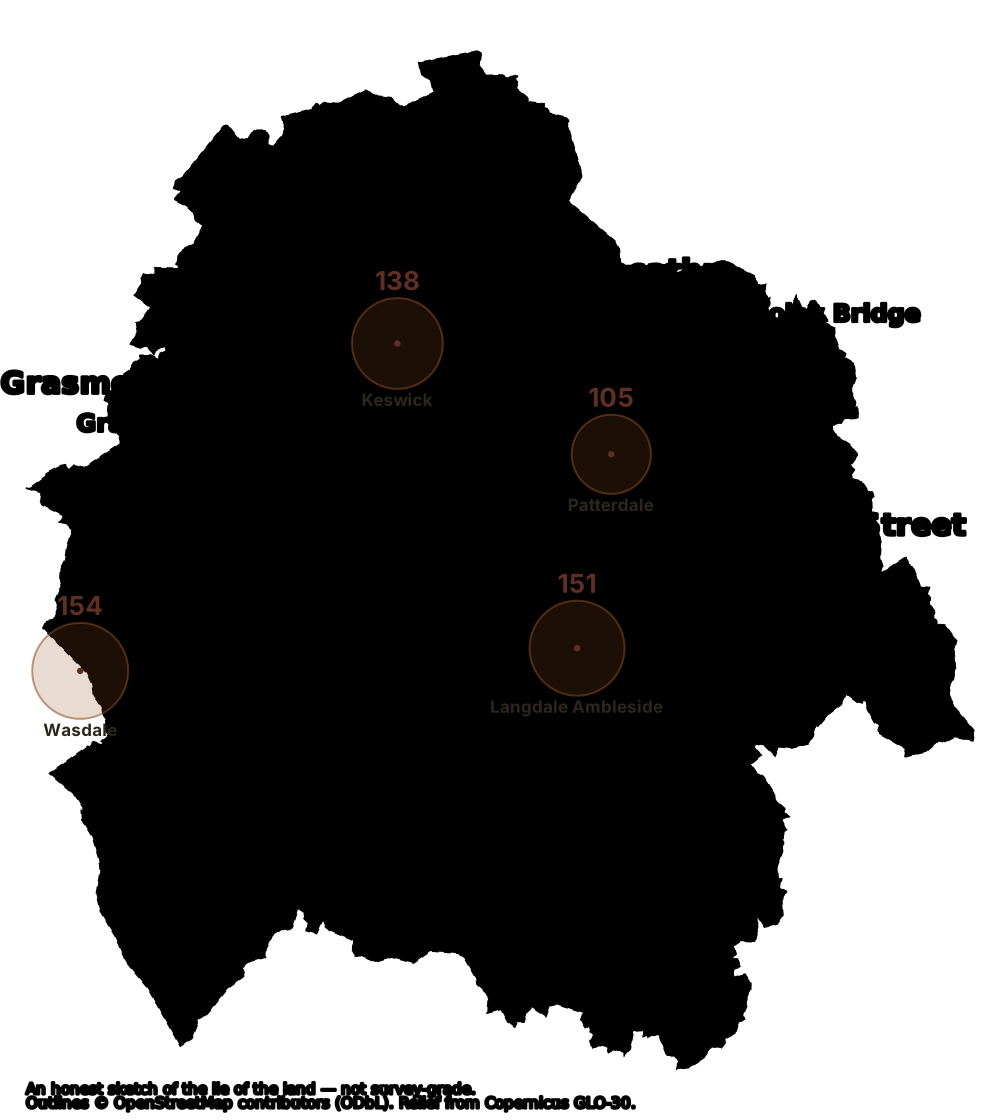
The numbers make the case. In 2024, Mountain Rescue England and Wales were called out 3,842 times (opens in new tab) — a record year, with not a single day without a callout. The Lake District teams are the busiest in the country, and Wasdale (opens in new tab) — covering Scafell Pike, Great Gable and Pillar — is the single busiest team in England. Slips and trips are the most common cause, and ankle and lower-leg injuries are consistently the largest injury category. Keswick MRT (opens in new tab) recorded its busiest year on record in 2024 too.
None of that is a reason to stay home. The fells the numbers come from are simply the most-walked fells in England. It's a reason to carry a kit you can actually use, keep your phone charged, and know the 999 procedure before you need it.
The mindset
The most useful thing you can do for an injured person on a cold fell is rarely heroic. It's getting them off the wet ground and out of the wind, insulating them, keeping them calm, and making an early, accurate call for help. Heat loss and shock are what turn a manageable injury into an emergency while you wait.
2. What to carry — my kit, honestly
Most online kit lists are written by someone who has never had to open one in anger. So rather than give you an idealised list, here's what I actually carry, and the gaps I'm still filling. The schematic below is the fuller picture — a sensible hillwalker's kit grouped by job.
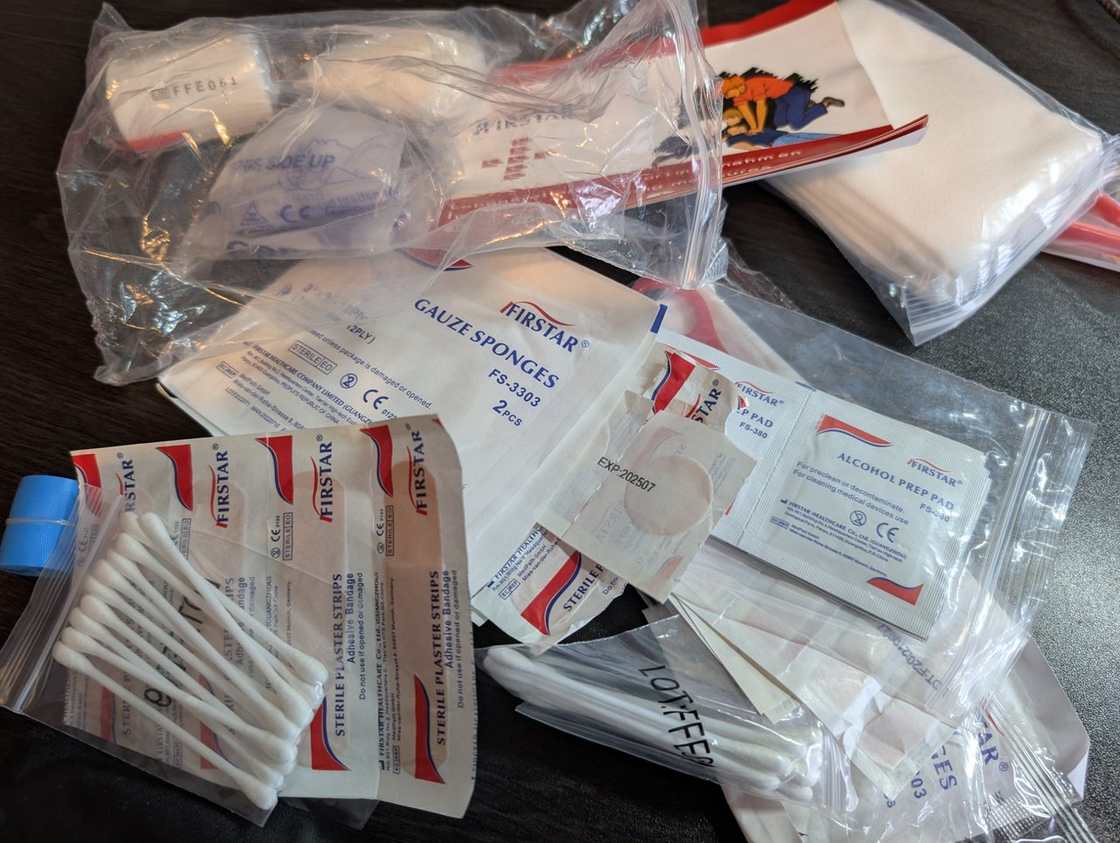
What's actually in my pack
My base is a cheap, compact off-the-shelf first-aid kit — the kind of 100-piece pouch that's mostly plasters, gauze and a few dressings. On its own it's nowhere near enough for a fell day, so around it I carry the things that actually matter when you're a long way from a road:
- An emergency bivvy bag — a high-visibility survival bag. The single most useful thing I carry for a stationary, cold casualty.
- A survival whistle — six blasts, pause, repeat, if you're separated or your phone's dead.
- A Garmin inReach Mini 2 — a satellite communicator that can trigger an SOS and send messages with no phone signal. The same device I rate in the navigation guide's comms section.
- A change of warm layers in an ultralight dry sack — dry clothes are first-aid kit: they're what you put on the cold person who's now sitting still in the wind.
- Ibuprofen, a head-torch with spare batteries, a power bank, and a tick-removal tool.
The gaps I'm filling — what a basic kit leaves out
I'll be honest: a cheap 100-piece kit has real holes for fell use, and these are the items I'm adding. If your kit is similar, add them too:
- A SAM splint. Ankle and lower-leg injuries are the number-one Mountain Rescue callout, and a basic kit has nothing to immobilise a limb. A rollable aluminium SAM splint applied over the boot stabilises a suspected fracture and reduces pain while you wait.
- Compeed (hydrocolloid) blister plasters. Generic plasters don't stay on wet skin or cushion like hydrocolloid ones. Blisters are the commonest reason a fell day fails early — carry a small strip separately.
- A CPR face shield with a one-way valve. Cardiac events on ascent are a documented Lakeland callout pattern, especially in older walkers. A proper valve, not just a plastic film.
- A 7.5 cm crepe bandage. For a figure-of-eight ankle wrap over the boot — it can be the difference between a slow walk-out and a stretcher.
- A triangular bandage. For a shoulder or wrist sling, improvised strapping, or a head bandage.
- Zinc-oxide tape. Sticks when wet, unlike standard tape — wound closure, blister prevention, securing dressings in the rain.
- Steri-Strips (wound closure strips). Head and face cuts from descending slips are a recurring injury, and on a small, clean one these hold the edges together better than a plaster. Pressure to stop the bleeding comes first, though — and a cut that is deep, dirty, gaping or still bleeding wants a dressing and a doctor, not a strip.
- Aspirin (300 mg). For a suspected heart attack — the NHS advises (opens in new tab) a conscious adult chew a single 300 mg aspirin while waiting for help, unless they're allergic. Not for under-16s.
- A small irrigation syringe. For flushing grit and mud out of a wound properly — fell cuts are dirty.
None of the kit named here is sponsored, gifted, or carries an affiliate commission — it's simply what I carry, or am adding to my own pack.
The point of all this
A kit is only as good as your ability to open it fast and use what's inside. Keep it in a dry bag in a pocket you can find without taking your rucksack off, and make sure everyone you walk with knows you've got it.
3. Blisters — the injury that ends most fell days
Blisters aren't dramatic, but they end more walks than anything else — and a bad one changes your gait, which on a long descent quietly raises your trip-and-fall risk. The whole game is prevention.
Prevent them: wear proper walking socks (wool or synthetic, never cotton), in boots that fit and are broken in, and tape known hot-spots before you set off. Double-layer socks have the best evidence for reducing the shear that causes blisters.
On the hill, stop the moment you feel a hot spot — don't wait for the blister. Dry the skin and apply zinc-oxide tape or a hydrocolloid plaster, flat and crease-free.
Should you pop a blister? No, if you can avoid it — and this is the bit people get wrong. The NHS (opens in new tab) and Red Cross are clear: the intact roof is a sterile barrier. Pierce it and you open a wound to everything the fell carries. Cover it and walk on. Do not burst it yourself, however large: the NHS says a large or painful blister is one for a GP to drain with a sterile needle. If it has already torn, clean it, cover it, leave the roof on — and never peel the skin away.
4. Ankle & lower-leg injuries — the number-one callout
This is the big one. Ankle and lower-leg injuries are consistently the single largest injury category Mountain Rescue deals with, almost always from a slip on descent when you're tired and your concentration has gone. So the key field skill is telling a sprain you can walk off from a fracture you mustn't.
Sprain or fracture?
You can't diagnose a fracture without an X-ray, but you can assess risk. The validated Ottawa Ankle Rules (opens in new tab) are built to rule a fracture out, not in: pooled across seven emergency-department studies they caught 97% or more of real breaks, while fewer than one in five of the injuries they flagged turned out to be fractured. On the fell that is the right way round — a false alarm costs you a slow, careful descent. Treat it as a suspected fracture — and plan for a stretcher, not a walk-out — if any of these are true (the first two are the field version of the rules; the third is not part of them):
- They can't bear weight — can't manage four steps, even slowly.
- There's bony tenderness over the ankle bone (the bumps on either side) or the bony lump on the outside of the mid-foot.
- There's obvious deformity, or severe and worsening pain.
If it's none of those — they can weight-bear, the pain settles, the tenderness is soft-tissue not bone — you're likely dealing with a sprain, and RICE plus a careful assisted descent is reasonable.
Treating it on the fell
For a suspected fracture: leave the boot on if it's supporting the ankle — it acts as a splint, and taking it off invites immediate swelling. Apply a SAM splint over the boot if you have one, wrap with a crepe bandage, keep them off the leg, and insulate them straight away — someone who's suddenly immobile loses heat fast. Then call 999 → Police → Mountain Rescue with a grid reference or what3words. Don't give food or drink if there's any chance of surgery later.
5. Head, shoulder and wrist injuries from slips on the way down
These cluster around the same mechanism: a slip, an instinctive outstretched hand, or a head striking rock.
Head injuries
RICE doesn't apply to heads. Any significant blow followed by loss of consciousness (even brief), confusion, repeated vomiting, vision changes, a severe headache, or any deterioration is a 999 call. Be blunt with yourself about this: if someone has hit their head and seems confused, call Mountain Rescue and don't try to walk them out — the descent makes it worse. Keep them still and warm. If they are unconscious but breathing normally, still use the recovery position (see §7): an open airway comes first, even when a neck injury is possible. Roll them gently, keeping head, neck and back in line, and tell the call handler they have hit their head so they can talk you through it.
Shoulder dislocation
Do not try to put it back. Without training and pain relief you risk serious further damage. Support the arm against the body with a triangular-bandage sling, stop it moving, keep them warm, and descend if it's safe or wait for help.
Wrist fractures
Common from a fall onto an outstretched hand. Immobilise with a splint or a sling and keep it elevated. A wrist fracture is usually a "walking casualty" — if they're otherwise well and the route is reasonable, support them down.
6. Hypothermia
This is the highest-stakes section. Hypothermia rarely looks like the television version; it creeps in, and its first victim is the judgement you'd need to recognise it. As one Lakeland team member put it, the cold dulls your decision-making — so the casualty is often the last to realise they're in trouble.
Learn the umbles: someone going hypothermic stumbles (loses coordination — watch their feet), mumbles (slurred, slow speech), fumbles (can't manage a zip or a wrapper) and grumbles (irrational irritability). Any one of those on a cold, wet day in someone who was fine an hour ago, and you treat it as hypothermia — don't wait for a second sign to confirm it.
What not to do
Three common, harmful mistakes:
- Don't give alcohol. It opens the surface blood vessels, dumps core heat to the skin, and only feels warming. It's actively dangerous.
- Don't rub the limbs. It drives cold blood back to the core (the "afterdrop") and can trigger a dangerous heart rhythm.
- Don't make a hypothermic person "walk it off." Exertion increases heat loss and cardiac risk. Stop, shelter, insulate, call.
Treating it on the fell
Get out of the wind — behind a boulder, in a bothy bag, or deploy a group shelter. Insulate from the ground (a rucksack under them beats nothing). Replace or cover wet clothing with dry layers, wrap them in a foil blanket or bivvy, and for a mild, responsive casualty give warm sweet drinks and food. For mild hypothermia, sharing body warmth inside the shelter is one of the few things you can actually do about it in the field. Don't wait to see whether they improve: if you suspect hypothermia, call 999 for Mountain Rescue straight away, and keep doing all of this while help comes. The NHS treats suspected hypothermia as a medical emergency.
7. Cardiac arrest & CPR on remote terrain
Heart attacks and cardiac arrests are a real and rising part of the Lakeland picture, especially among older walkers on sustained ascents in cold air. If someone collapses and does not respond, call 999 straight away, even if you are on your own: put your phone on speaker and check their breathing while the call connects. Resuscitation Council UK’s 2025 guidance is to call for anyone who is unresponsive, without first confirming how they are breathing; the call handler will help you judge it. Then work through the DR ABC primary survey — and if they're not breathing normally, start CPR. Occasional gasping is not normal breathing: the odd agonal gasp is what cardiac arrest looks like, not a sign of life. And if you have never been trained to give rescue breaths, or you would rather not, give chest compressions on their own and don't stop — compression-only CPR is what the Resuscitation Council advises in exactly that case, and it is far better than hesitating.
Compressions are hard and fast — about 5–6 cm deep, 100–120 a minute, in the centre of the chest. In remote terrain you may need to keep going for a long time before help arrives, which is exhausting alone; if there's more than one of you, swap every couple of minutes. If someone is unconscious but breathing normally, put them in the recovery position and keep checking.
The cold exception — "not dead until warm and dead"
A severely hypothermic person in cardiac arrest can survive with CPR and hospital rewarming, because a very cold heart may only restart once warmed. Don't give up on a cold, apparently lifeless casualty. Keep going, and keep going for longer than feels reasonable, until the team takes over. There is specialist guidance on interrupting CPR in deep hypothermia, but it turns on a core temperature nobody can measure on a fell, so we are not going to reduce it to a recipe here — stay on the phone and let the 999 call handler direct you.
8. The evacuation decision — walk out, or call?
This is the most stressful judgement in fell first aid, and people get it wrong in a predictable direction: calling Mountain Rescue feels dramatic, so they try to walk an injured person down when they shouldn't — and a slow, painful descent on a suspected fracture often makes it worse. The teams are unambiguous: all their callouts are genuine, and you will not be wasting their time. When in doubt, call.
| Situation | Self-evacuate with support | Call 999 / wait for MR |
|---|---|---|
| Ankle — bears weight, no bony tenderness | Yes, if pain allows and the descent is moderate | If deteriorating, or the route needs scrambling |
| Ankle — can't bear weight / bony tenderness | No — immobilise and call | Yes — stretcher evacuation |
| Lower-leg fracture (deformity, severe pain) | No | Yes — splint and stretcher |
| Wrist fracture, otherwise well | Yes — sling and assist down | Only if the route is technical or conditions severe |
| Head injury — any LOC, confusion, vomiting | No | Yes, immediately |
| Mild hypothermia — shivering, alert | Only if Mountain Rescue advise it — shelter, insulate and warm first | Yes — call when you suspect it; warm them while you wait |
| Moderate hypothermia — not shivering, confused | No — movement risks the heart | Yes — shelter, warm, wait |
| Cardiac arrest / chest pain | Start CPR / sit them down, give aspirin | Yes, 999 immediately |
What to tell Mountain Rescue
This mirrors the navigation guide's comms section. Dial 999, ask for Police, then Mountain Rescue, and have ready:
- Your six-figure OS grid reference or what3words location.
- The number of people in your party.
- What's happened, when, and the casualty's current condition (conscious, breathing, warmth).
- Your phone number — they'll call back. Stay on the line if you can; if signal's poor, text 999 (pre-registered).
If you're not sure which team covers you, the navigation guide lists all the Lake District teams and their areas — though you never call them directly; 999 tasks them.
9. Prevention: what to do before you set off
Most of what stops a first-aid emergency happens before you leave the car park, and the navigation guide covers route planning, timing and weather in depth — so here's just the safety-specific core.
Layers: a wicking base (never cotton — it stays wet and stops insulating), a warm mid-layer, and a waterproof shell that is never optional on the open fell, however mild the valley feels. Most early hypothermia is in people who dressed for the car park, not the summit wind.
Fuel and pace: eat before you're hungry and drink before you're thirsty — your body needs fuel to make heat. Carry more food than you think you need.
Know when to turn around. The single best injury-prevention decision is to abandon a summit when the weather, the light or your party's energy says so. Check a real mountain forecast (MWIS, the Lake District Weatherline), not the valley one.
10. Actually learning this — courses worth taking
I'll say it plainly: reading this is not the same as being able to do it, cold and frightened, when it counts. A guide gets you the principles; a course gives you the hands-on practice and the muscle memory.
The key difference is the gap a course is built around. Standard first aid assumes an ambulance is eight to twelve minutes away. Wilderness First Aid assumes help is one to four hours away, and every protocol is adjusted for that — which is exactly the fell situation. Providers worth looking at include Wilderness Medical Training (opens in new tab) and Lake-District-based outdoor operators running mountain-relevant courses; for mountain leaders the standard is the Mountain First Aid qualification. If you walk the fells more than a handful of times a year, it's a better buy than most gear upgrades.
11. Where it most often goes wrong
These aren't fells to avoid — they're the most-walked fells in England, which is exactly why the callout numbers are highest here. They're places to walk with your kit accessible, your phone charged and the 999 procedure memorised. (For the navigation hazards on the same ground, see the navigation guide's danger spots.)
- Scafell Pike and Great Gable (Wasdale). England's busiest rescue area. Long, late descents and the boulder ground around the top generate ankle injuries and benighted parties.
- Helvellyn and the eastern fells (Patterdale & Keswick). The most-walked high fell in England; ankle injuries on the descents to Glenridding and Thirlmere are a recurring pattern.
- Bowfell and the Langdale Pikes (Langdale Ambleside). Steep, rough descents — Rossett Ghyll, Mickleden, Stickle Ghyll — where a slip quickly becomes a lower-leg fracture.
Before you walk any of them, read the hazard notes for your specific route — every fell page on hikes.guide is graded from published Mountain Rescue incident data. Start with the most hazardous fells list.
12. Frequently asked questions
Should I pop a blister?
No, if you can avoid it. The intact roof is a sterile cover — pierce it and you've made a wound on a dirty fell. Cover it with a hydrocolloid plaster and walk on. Do not burst it yourself, however large: the NHS says a large or painful one is for a GP to drain. If it has already torn, clean it, cover it and leave the roof on — never peel the skin away.
What are the early signs of hypothermia?
Not the dramatic version — early on it's irritability, slow answers, clumsy hands and an unsteady walk. The umbles: stumbles, mumbles, fumbles, grumbles. Any one in someone who was fine an hour ago, on a cold wet day, and you treat it: stop, shelter, insulate, and call 999 for Mountain Rescue.
When should I call 999 instead of walking someone out?
If there's any doubt, call. The specific triggers: can't bear weight on the injured limb; visible deformity; a head injury with confusion; suspected hypothermia; chest pain or cardiac arrest. Ankle that bears weight with a gentle descent ahead — walk them down slowly.
What do I actually say when I call Mountain Rescue?
Dial 999, ask for Police, then Mountain Rescue. Give your six-figure grid reference or what3words, the number in your party, what's happened and when, the casualty's condition, and your phone number. Stay on the line; if signal's poor, text 999 (you must have pre-registered).
Is first-aid training really worth it?
Yes. Reading a skill and performing it under stress are different things. A one- or two-day Wilderness First Aid course teaches this material with hands-on practice and feedback. If you're on the fells regularly, it's one of the best safety investments you can make.
What's the minimum kit for a fell walk?
Cover wounds (gloves, dressings, tape, plasters), blisters (hydrocolloid plasters, zinc-oxide tape), bones and sprains (triangular and crepe bandages, ideally a SAM splint), warmth (foil blanket or bivvy, ideally a group shelter) and basic painkillers — in a dry bag you can reach fast, with a charged phone and power bank.
13. Pocket cards to print
Four cards from one sheet of A4, printed on one side only. Cut, fold, and they live in the lid pocket of your rucksack. The wording is taken straight from this guide — the same advice, in a form that works when your phone is dead, wet, or in your other pocket.
- Use the button below, and print single-sided, at 100% scale — never “fit to page”, which shrinks the folds out of alignment. Only the sheet prints, not the guide.
- Cut along the two dashed lines into four A6 quarters.
- Fold each quarter along its dotted line, printed sides out. The back panel is printed upside down on purpose, so it lands the right way up.
- Fill in card 4 in pen before you set off. Writing it down is the preparation.
Sources & further reading
- Resuscitation Council UK — adult basic life support & CPR (30:2) (opens in new tab).
- St John Ambulance — first aid advice (opens in new tab) (primary survey, recovery position, bleeding, slings).
- British Red Cross — learn first aid (opens in new tab).
- NHS — hypothermia (opens in new tab), blisters (opens in new tab), sprains & strains (opens in new tab), heart attack (opens in new tab) (aspirin guidance).
- Ottawa Ankle Rules — validated field criteria for suspected ankle/foot fracture (referenced by NICE/NHS).
- Mountain Rescue England & Wales — Annual Review 2024 (opens in new tab) (callout and injury patterns); BMC (opens in new tab) safety guidance.
- Lake District teams — Wasdale (opens in new tab), Keswick (opens in new tab), Langdale Ambleside (opens in new tab) and the wider LDSAMRA (opens in new tab).
This guide compiles general first-aid guidance from the UK authorities above with the author's own fell experience. It is not medical advice and not a substitute for hands-on training. Clinical guidance changes — always check the current source, and in an emergency dial 999.